

Magic Threads – Blog Post
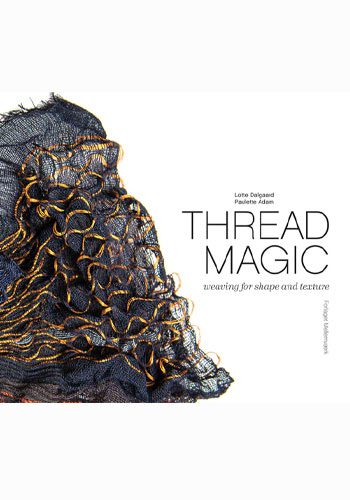
Books. Books. Who doesn’t love a good book? Books can be a source of comfort, inspiration, or a window into new worlds we haven’t explored yet. We have Thread Magic, Weaving for Shape and Texture by Lotte Dalgaard and Paulette Adam back in stock, and Katzy was reading it the other day and wanted to share some of her findings from this delightful book.
by Katzy L.
I first read this book after taking Denise Kovnat’s class Weaving Outside the Box: How to Make Dimensional Cloth at Intermountain Weaver's Conference in Logan UT. The world of textured fabrics was opening to me, and the book Thread Magic filled me with information and inspiration. Even the fabric on the cover of the book made me think about how I could add texture to my handwoven fabrics. There are chapters on Active Yarns, Creating Texture in your fabrics, and lots of advice on setting up your loom with active yarns, winding bobbins, and wet finishing your textured fabrics.
Great Info!
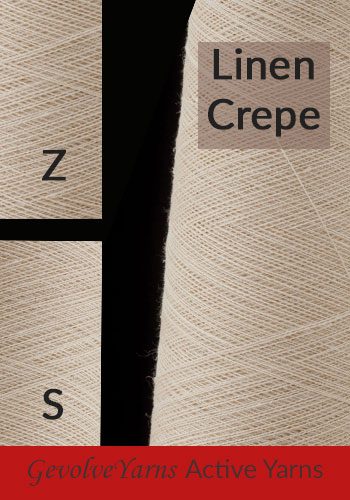
There are sections of the book with both general and specific information about active yarns. For example, some of the things described in the chapter on crepe yarn include how to understand the overtwisting in the crepe yarn, the twist angle, the use of indicator colors, and how to overtwist your yarns. There are even formulas for how to convert twist per meter (tpm) into twist per inch (tpi).


Projects to Inspire!
In addition to the general information in the book on yarns and how they will interact with woven structures and washing, there are interesting projects in the book. And tons of amazing pictures filled with lusciously textured fabrics! Many of the projects described in the book use yarns that are sourced in Europe, but I have been inspired by Lotte and Paulette to go through our Lunatic yarns and figure out how to use yarns that we have to make bumpy fabrics. We have plenty of material with our cotton and hemp yarns, as well as the active yarns in our GevolveYarns™ collection. Maybe I could combine our Lyte Hemp™ yarns with a linen crepe yarn?
Make Your Own Magic!
Or, I could combine Tubular Spectrum™ mercerized cotton yarns and some of the skinny yarns in the GevolveYarns™ collection. Stainless steel and silk yarns to provide some shapeable memory to the fabric, thin polyesters to make heat-set fabric like the Pretty in Pleats vest, or the pleats that could be made with elastic yarns. I could use what I learned about elastic yarns in the Simply Irresistible scarf. In those scarves, the center elastic section makes the 20/2 cotton bump up in a fun way. I wrote about that in the blog post about taking Denise's class. Thin elastic yarns can be paired with all kinds of other yarns to make interesting textures.
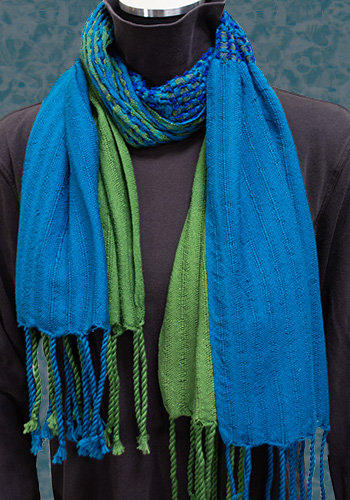
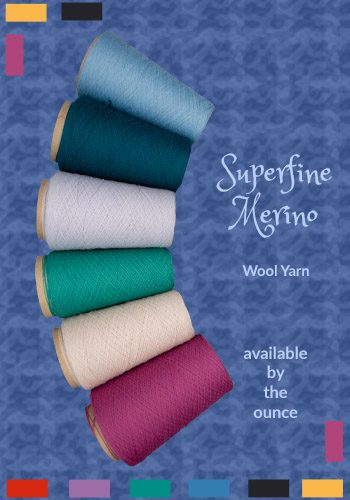
Or, Maybe I could use some of our remaining merino wool from Jaggerspun to combine with a silk elastic yarn or linen crepe yarn to make fabric for a jacket. Or the Long Lines project on page 83 makes me ponder how to use our 20/2 or 10/2 Tubular Spectrum Cotton yarns with our linen singles yarns and the linen crepe yarns.
Hmmm. So many fun possibilities to ponder. I love it when books inspire me to create in new and exciting ways! Thank you Lotte and Paulette!