

Floating Along – Blog Post
There is often debate at our local guild meeting about whether to use floating selvage threads. The consensus seems to be, like most things these days…it depends! Michele recently wrote a blog about Diane Mortensen and her dislike of floating selvage threads. Katzy has been collecting opinions about floating selvage threads for many years and frequently uses them as she weaves. She has a few tips on when and how to use them to share with you.
By Katzy L.
A Floating What?
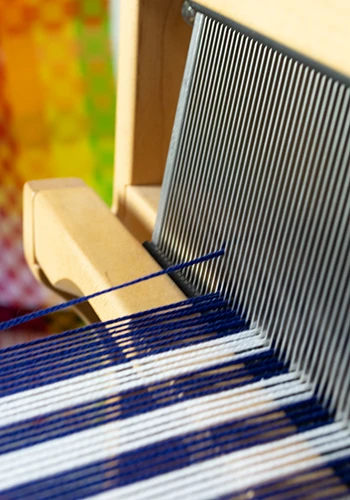
A floating selvage thread is an extra thread (or two) that is added to the selvage edge of your fabric. Those threads are not threaded through a heddle, but they do go through the reed and are tied up at the front of the loom with the rest of the warp threads. Because they do not pass through a heddle, they float up above the other warp threads at the selvage edge. See the picture to the right. This floating allows you to either go over the thread or under the thread when you are weaving.
The intent of the floating selvage threads is to ensure that your weft yarns go all the way to the selvage edge with each pick. Weaving structures like twill or summer and winter have weft floats. Sometimes the weft yarn doesn’t always go all the way to the outside threads leaving a ragged selvage edge. Floating selvages can fix that ragged edge by forcing the weft yarn to always go all the way to the outside.
Tips for Using Floating Selvage Threads
Two tricks for good looking edges. These are suggestions, not mandatory!
- Pick a Way and Use it. I use Over, Under. I like to weave over the floating selvage thread when entering the shed, and under the floating selvage thread when leaving the shed. This way, I always go over and under each floating selvage thread with every two picks. The consistency is important and helps me remember to catch the floating selvage thread.
- No Twisting. Keep the floating selvage threads from twisting around the edge threads, by taking care to go over the floating selvage when the outside warp thread is up, and under the floating selvage when the outside warp thread is down. This is especially important when using a basket weave structure for your hems. If you don’t alternate the threads, the floating selvage can get twisted around the edge threads and it can be difficult to separate it when you switch to another structure for the body of your woven fabric.
When Floating Selvage Threads are Not Needed
There are several scenarios where floating selvage threads are not necessary and can get in the way.
- Plain Weave. Weaving with structures that incorporate plain weave or close to plain weave in the structure do not have long floats. The weft yarns always go to the selvage edge. These woven structures include plain weave, shadow weave, and doubleweave.
- Plain Weave Edges. When there are 4-6 ends of plain weave on either selvage edge of your fabric, the weft threads will be secured. You need at least 4 threads of plain weave to provide enough stability for your edge.
- Start From the Other Side. As Diane Mortensen suggested, sometimes which side you start your shuttle on can make a difference in how the selvage threads interlock. This option is always worth a shot. Click here to read Michele’s blog post.
- Remove Selvage Threads. I have been told by some weavers “If it offends me, I cut it off”. That is how they deal with unruly edges without using floating selvage threads.
If you choose to use a floating selvage thread, there are two ways to go about it:
Wind It In
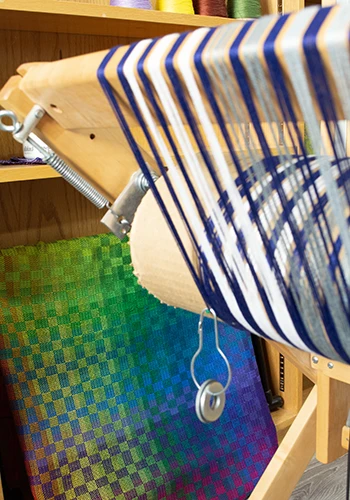
It is easy and convenient to wind the floating selvage threads with the rest of your warp. After threading the rest of the warp threads, pull the floating selvage threads through the reed as you sley the rest of the warp threads. Tie the floating selvage threads in with the rest of the warp threads as you attach them to the front apron rod.
If the tension on the floating selvage gets loose, weight the thread by hanging a shower curtain hook with a weight on it. Then, move the weight to the warp beam, and it will reposition itself each time you advance the warp. You can see the weight on the floating selvage in the picture at the left.
Or Weight it Down
You can add floating selvage threads after you have beamed the warp. Perhaps you didn’t realize that you would need a floating selvage, and you need to add it after you start weaving. The steps to add a floating selvage are as follows:
- Begin by measuring the floating selvage thread(s). Make them slightly longer than the warp length. Now you have a bit extra for tying the threads to the weight and to the front of the loom.
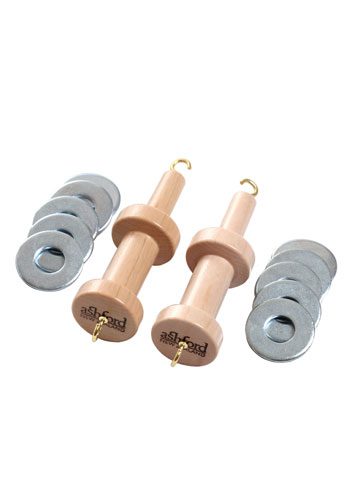
- Wrap those threads around something. This keeps the threads from getting tangled. Ashford’s Warp Thread Weights provide an elegant solution. You can also use fishing weights, pill bottles with quarters or a variety of other ways to get the job done.
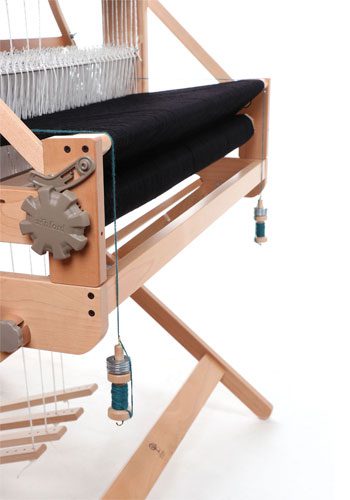
- Attach the free end of the floating selvage thread to the front of the loom. From the back, carry the thread past the heddles, then through the reed. Use an adjacent empty dent to pass the floating selvage thread through the reed. Then use a t-pin to attach the floating selvage to the woven cloth or tie the floating selvage thread(s) to a warp bundle or add it to a warp bundle.
- Hang the floating selvage and its weight over the back beam on the loom. Provide tension to the floating selvage threads by adding weight. The Ashford Thread Weights come with metal washers so you can adjust how much tension you want on the threads. Make sure that the tension on the floating selvage threads mimics the tension of the other warp threads. Remember the Goldilocks syndrome: Not too much, not too little, just right! We have a quick YouTube video on how to wind the yarn on the thread weights. Click here.
Weave Away!
Now that you have your floating selvage threads, you are ready to weave! Remember to go around the floating selvage threads as you weave. If you want to watch floating selvage threads in action, check out this video on our YouTube channel where Katzy is weaving the blue colorway of the Toasty Turned Taquete Cowls. Watch as her shuttle goes over and under the floating selvage thread as the shuttle moves in and out of the shed.