
Shrink Me! Working with Elastic Yarns. Blog Post.
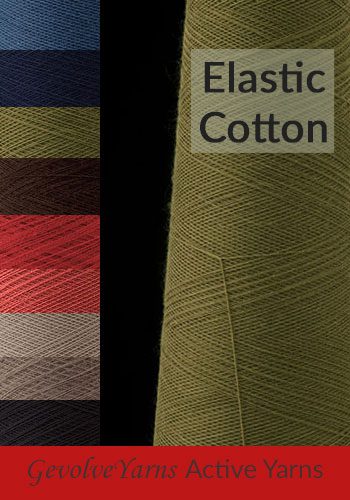
When we acquired the GevolveYarns collection, we were astonished by the variety of yarns. Thick and thin, smooth and bumpy, yarns made from paper, and yarns made from silk. And then there were the active yarns. Crepes, stainless steel yarns, yarns that could be heat set and elastic yarns. Elastic yarns are a specialized type of yarn that contain elastic fibers, allowing the yarn to stretch and recover its original shape. Elastics can create lovely texture in your fabrics that otherwise couldn’t be achieved. Katzy has been using our elastic yarns and wants to share what she has learned.
By Katzy
Elastic fibers are typically made of polyurethane and there are several brands or chemical names associated with these elastic fibers: Lycra®, Spandex and elastane. Lycra® is a brand name while Spandex and elastane are the generic names. They are all roughly equivalent in their elastic properties.
Oh, So Skinny! Pair Them!
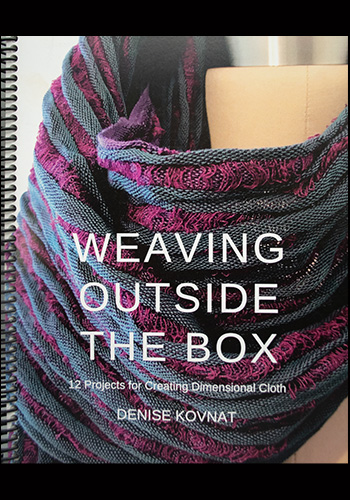
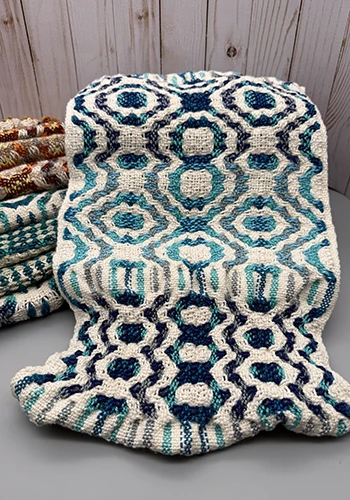
The elastics that we stock are thin yarns. In addition to using them singly, they pair well with other yarns such as cotton, wool, and hemp. Don’t be afraid to mix them with your favorite yarn and see how they add texture. Our Simply Irresistible Scarves (designed from the ideas of Denise Kovnat in her book “Weaving Outside the Box, 12 Projects for Creating Dimensional Cloth”) have elastic cotton and 20/2 mercerized cotton for weft in the center section. Those yarns scrunch up when the scarves are washed. And the texture that you get from the loops of cotton is lovely!
Watch What Happens When It Gets Wet!
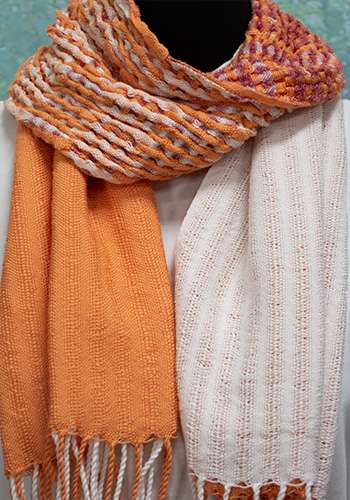
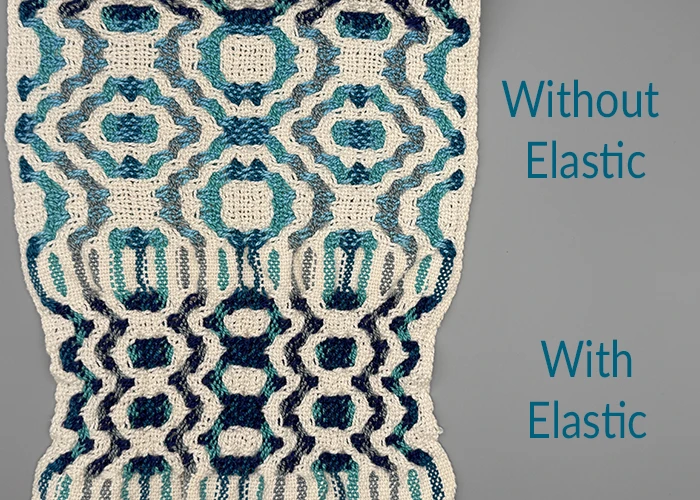
While weaving with elastic yarns, the fabric is flat on the loom. A sizing on the yarn prevents it from being too lively before it is washed. So weaving is easy. The magical shrinkage happens when you put the yarn in water after the project comes off the loom. You can see how much shrinkage happens when the fabric is washed in the section that has elastic versus the section that doesn't have elastic yarn!
Weave structures with floats work great with elastic yarns. Those floats provide space for the shrinkage. Structures like deflected doubleweave, spaced warps, honey comb all work well with elastics. If you use elastic yarns with structures that do not have floats, the elastic yarns will not have room to shrink.
Winding Alone or With a Friend?
To pair an elastic yarn with another yarn, wind both yarns onto a bobbin at the same time. Place the 2 source cones next to each other on the floor and wind the bobbin holding both yarns in the same hand. Holding your hand close to the bobbin will help prevent the yarns from separating as they go onto the bobbin. I have used both a hand winder and an electric bobbin winder to wind the spools from two cones and have not had any trouble with the yarns getting tangled either as I wound onto the spools or while I was weaving. Want to see how the two yarns wind together? Here is a link to a video that we posted on Youtube of 20/2 Tubular Spectrum Yarn winding with Elastic Cotton Yarn. Click Here for the video.
Warp with Care
We recommend that you have some experience with active yarns to successfully use them in your warp. If you want to use these yarns for warp, here are a few suggestions:
- Keep the warp under tension at all times: on the warping board and as you wind the warp onto the loom.
- Warp back to front. This will ensure the stability of the warp and prevent it from showing its potentially lively side before you are ready for it to be lively.
- These are thin yarns and could be subject to breaking when used as warp. The sizing on the yarn does make it possible to use these yarns for warp. If you decide to use these yarns as warp, please warp from the back and always keep the yarns under tension.
- Giovanna Imperia wrote a lovely article about weaving with elastic yarns, and she has some good information about using the yarn for warp. You can find the information here.
Treat them Right!
Modern elastic yarns are stable and have long-wearing properties with normal use. As with any handmade fabrics, do not leave them in the sun or expose them to repeated high heat (hot iron or dryer) as this can weaken the elastic properties of the yarn. We have all seen that effect as our stretch jeans wear out after repeatedly washing and drying them using high heat in the dryer. If you make something with elastic yarn, it is best to line dry (or use a cool setting on the dryer) the item with repeat washings. Or make something like a scarf that doesn’t need frequent laundering.
We generally think about how to use our yarns in weaving, but you could use them in knitting, crocheting or any other handcraft that you would like to pursue.
Want to Stretch Your Knowledge with More Information?
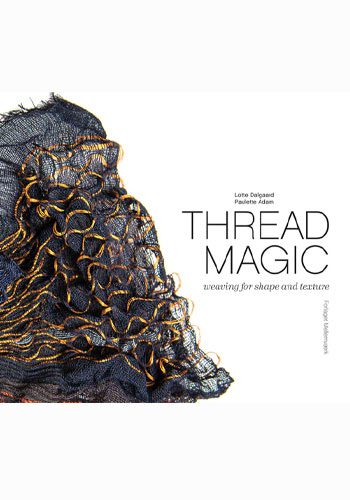
Looking for more information about elastic yarns? Lotte Dalgaard and Paulette Adam have tons of information in their book “Thread Magic, weaving for shape and texture”. Denise Kovnat’s book “Weaving Outside the Box, 12 Projects for Creating Dimensional Cloth” is also full of projects to get you weaving with elastics and other active yarns.
Don’t be afraid to try these yarns!